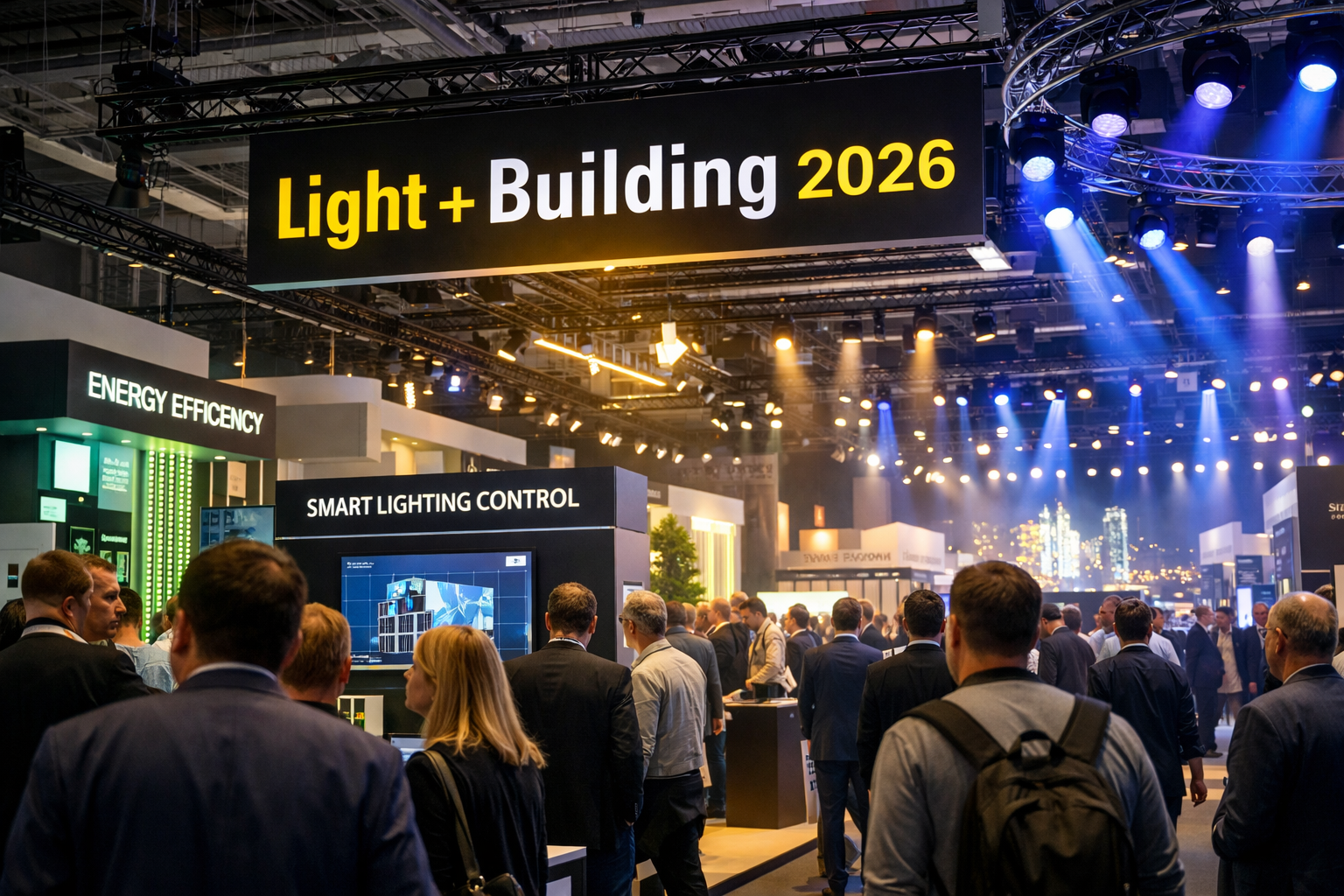
As the global lighting industry continues to evolve, Light + Building 2026 once again stands at the forefront of innovation. Held in Frankfurt, this world-leading trade fair brings together manufacturers, designers, and technology experts to explore the future of lighting, electrical engineering, and building automation. In 2026, the exhibition clearly highlighted a unified direction for the industry: smarter systems, greener solutions, and more immersive lighting experiences. These developments are not only shaping architectural lighting but are also increasingly influencing stage, event, and entertainment applications, where flexibility, efficiency, and visual impact are becoming essential.
One of the most significant trends observed throughout the exhibition is the rapid evolution of intelligent lighting systems. Lighting is no longer an isolated function but part of a connected ecosystem, where advanced control protocols, wireless technologies, and seamless integration with building management systems are becoming standard expectations. For professionals in stage and event lighting, this shift brings clear advantages, including enhanced flexibility, remote operation, and improved synchronization across multiple devices and environments. As a result, compatibility and smart control features are no longer optional upgrades but key factors in product selection and system design.
At the same time, sustainability continues to drive innovation across the entire industry. Energy efficiency and environmental responsibility are now central considerations in both product development and project planning. LED technology remains dominant due to its long lifespan, low energy consumption, and reduced maintenance requirements, while manufacturers are also focusing on improving durability and reliability. In particular, the demand for weather-resistant fixtures is steadily increasing, especially for outdoor events, architectural installations, and temporary projects where environmental conditions can be unpredictable. Products with high protection ratings are therefore gaining greater attention, as they ensure stable performance in a wide range of applications.
Beyond functionality and efficiency, lighting is increasingly being used as a creative tool to enhance experience and storytelling. Designers are placing more emphasis on emotional impact, atmosphere, and audience engagement, using dynamic color mixing, precise beam control, and integration with multimedia elements to create immersive environments. This trend is especially evident in entertainment lighting, where visual experience plays a critical role in delivering memorable performances and events. As expectations continue to rise, lighting solutions must not only perform reliably but also offer the creative flexibility needed to support complex and visually rich productions.
The insights from Light + Building 2026 also suggest a gradual convergence between architectural and stage lighting. Features such as intelligent control, energy efficiency, and robust design are becoming universal requirements across different sectors, blurring the traditional boundaries between applications. For manufacturers and solution providers, this means that future-ready products must combine performance, reliability, and adaptability to meet the evolving demands of global markets. As the industry continues to innovate, the influence of Light + Building extends far beyond the exhibition itself, serving as a key indicator of emerging trends and a valuable reference point for businesses looking to stay competitive in an increasingly dynamic landscape.